Roof Insulation inDundee, Perth & Tayside —Cut Bills. Stop Damp.
Loft and rafter insulation installed to current Scottish building standards (Section 6) by qualified roofers — typical Tayside homes see meaningful heating-bill savings, prevent loft condensation, and pay back in a few years.
Scottish building standards (Section 6) · Cuts heating bills · 25-yr material life
Roof Insulation — what it covers and when it's right.
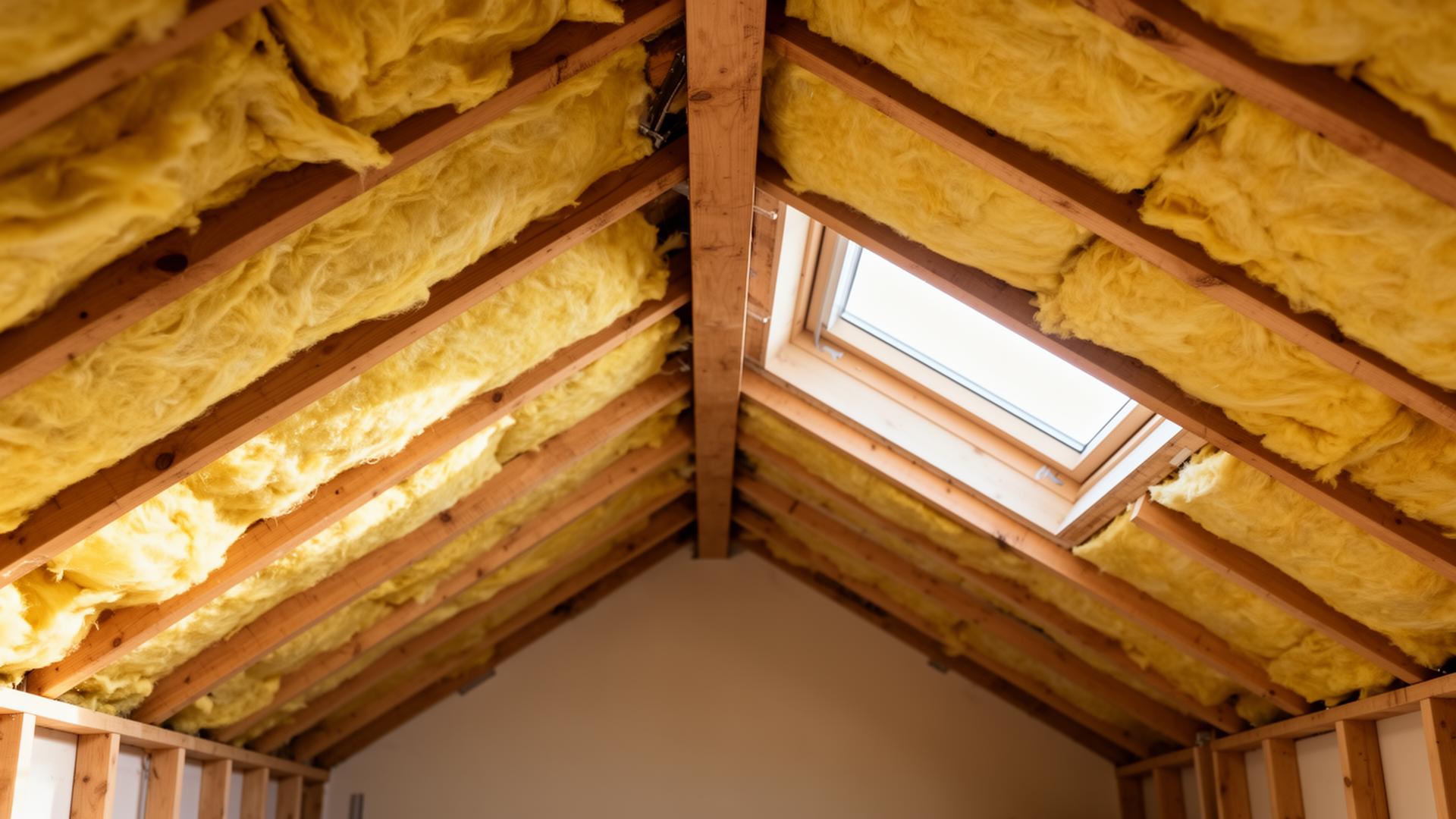
Roof insulation reduces heat loss through the roof — the single largest source of heat loss in most Scottish homes (25–30% of total). Options include traditional mineral wool loft insulation, rigid PIR boards between rafters (for warm-loft conversions), and over-rafter insulation during a re-roof.
Anyone with under 270mm of loft insulation (current standard), a cold upstairs in winter, a hot upstairs in summer, visible condensation in the loft, or a planned loft conversion.
Now — every year of delay means more heat lost through the roof and higher heating bills. Ideally during a re-roof (cheapest possible time). Otherwise standalone — typically a half-day job for a standard loft top-up.
Wrongly installed insulation causes condensation, damp, mould and ruined rafters. The risk areas are ventilation gaps at eaves, vapour control at the ceiling, and crushing insulation under boarded storage. Done properly it's transformational; done wrong it's expensive and damaging.
Leaving it costs you more in lost heat the longer you wait.
Wasted heating spend
An under-insulated loft loses heat continuously through the roof, pushing up the average Tayside semi's heating bills year after year.
Loft condensation
Warm moist air rising into a cold loft hits the underside of the roof and condenses. Result: black mould on rafters and ruined insulation.
Frozen pipes
Pipes laid above insulation in an uninsulated loft freeze annually. A burst pipe can cause significant water damage.
EPC drag
Poor insulation drags EPC ratings to D/E — sale-price impact and increasingly mortgageable-only at penalty rates.
Damaged ceilings
Crushed under boarded storage, insulation loses 60–80% of its R-value. Most boarded lofts are wasting their insulation.
Common mistakes we get called to fix
Most of these started as someone trying to save a few hundred pounds.
- Topping up over an old layer without checking for damp or rodent damage underneath
- Blocking eaves ventilation — the single most common DIY error, guaranteed condensation
- Boarding directly on top of insulation, crushing it useless
- Skipping the cold-water tank jacket and pipe lagging while the loft is open
- Installing rafter insulation without a vapour control layer — interstitial condensation rots the timber
A five-step system — no surprises.
Step 1 — Free loft survey
Inspect existing insulation depth and condition, ventilation, water tank, pipework, electrics.
Step 2 — Written quote
Itemised: material (mineral wool / PIR), depth, ancillaries (tank jacket, pipe lag, raised loft boarding if requested). Written quote.
Step 3 — Prep
Old damaged or rodent-contaminated insulation cleared, ventilation gaps installed at eaves, vapour control layer where required.
Step 4 — Install to 270mm+
100mm between joists + 170mm over joists in cross-pattern. Or PIR between/under rafters for warm-loft. Raised loft boarding fitted where you need storage above insulation.
Step 5 — Sign-off
Certificate of installation. Job done in a half to a full day for standard scopes.
What you actually get when you hire Rossi.
Lower heating bills
A typical Tayside 3-bed semi loses 25–30% of its heat through an under-insulated roof — insulation puts that back, every winter.
Pays for itself
A standalone loft top-up keeps cutting your heating bills for years; done during a re-roof, the saving comes even sooner.
Warmer winters, cooler summers
Insulation works both ways — keeps the bedroom liveable in August heatwaves too.
Condensation eliminated
Proper ventilation maintained means no more black mould on rafters and insulation that lasts 25+ years.
EPC bump
Loft insulation upgrade typically lifts EPC one full band — directly relevant at sale and remortgage.
Storage you can actually use
Raised loft boarding gives you a usable storage deck without crushing insulation.
The materials, methods and variations behind roof insulation.
Insulation isn't just 'more is better'. The right product in the right place with the right ventilation is what works. Wrong choices cause condensation, mould and structural damage. Here's the engineering.
Materials we use
- Mineral wool — 100mm and 170mm rolls, standard loft insulation
- PIR boards — 80mm to 150mm, for between/under rafter installations
- Multifoil insulation for retrofit warm-roof where rafter depth is limited
- Raised boarding systems — store above 270mm insulation without crushing it
- Vapour control layer (VCL) membranes for warm-roof builds
- Cold-water tank jackets and pipe lagging — always include with any loft insulation upgrade
Methods we follow
- Cross-laid mineral wool: 100mm between joists, 170mm across joists in opposing direction — eliminates thermal bridging through timber
- Eaves vents (or eaves trays) maintained at every rafter bay — non-negotiable for ventilation
- Raised loft boarding fitted on legs to preserve full insulation depth where storage is needed
- PIR between rafters with airgap above to underlay, PIR under rafters or 25mm insulated plasterboard internally — for warm-loft conversions
- Spray foam: we do NOT recommend in most cases — it bonds to underlay, voids warranties, and is flagged by surveyors as a mortgage issue
- Vapour control layer always installed warm-side on warm-roof builds — without it, the loft becomes a condensation trap
Variations of this service
Loft top-up
Most common job — bringing existing 100mm or 150mm up to the current 270mm standard with cross-laid mineral wool.
First-time loft insulation
Properties that have never been insulated. The biggest impact and the biggest saving, usually completed in a single visit.
Warm-loft conversion
Insulation at rafter level when the loft is being made habitable — PIR between and under rafters with VCL.
Over-rafter insulation
PIR boards laid above the rafters during a re-roof — the highest-performance option, only viable when re-roofing.
Raised storage boarding
Raised legs and OSB deck fitted above full 270mm insulation. Storage you can use without crushing the insulation.
When it applies
Typical situations we're called for across Tayside and Fife.
- Existing insulation under 270mm
- First-time insulation
- Loft conversion preparation
- Combined with re-roof
- Post-mould or condensation remediation
Residential vs commercial
Domestic loft insulation is typically a half-day to a one-day job. Commercial roof insulation is usually part of a flat-roof recover (warm-roof build-up with tapered PIR) — different scope, priced individually.
Answers, in plain English.
Something not covered? Phone 01738 260550 — answered by a roofer.
Every job is different — call us on 01738 260550 or send a quick message and we'll give you a written, no-obligation quote.
Often booked alongside roof insulation.
- Roof Replacement
Full re-roofs built to last decades, written quote and guaranteed.
- Pitched Roofing
Slate and tile pitched roofs, traditional craft, modern standards.
- Flat Roofing
GRP, EPDM and felt systems installed to manufacturer spec.
Roof Insulation across Tayside & Fife.
Same service, same standards, same care in every town we cover.
Not sure if we cover you? Ask us
Get a written quote for roof insulation — free, no obligation.
Free inspection as soon as we can. Written quote usually the same day as the visit. Phone answered by a roofer — no call centre, no chasing.